
I enjoyed rewatching this movie, but it feels more ironic now, and not in the way its creators intended.
The educated lefties of the Monty Python troupe spoke truth to power against a conservative regime that begrudgingly allowed it. But now they can’t, and it’s an irony their own comedic skits should have predicted.
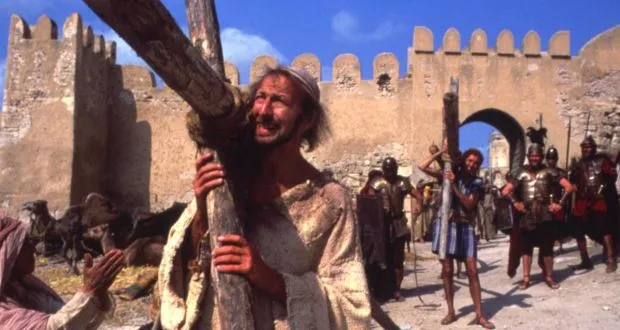
Monty Python’s Life of Brian was, for 1979 at least, an incendiary attack on Christianity that earned condemnation and outright censorship across the United Kingdom. Though the jokes go out of their way to not attack Jesus Christ or Christianity directly, those stodgy old Anglican pastors apparently saw the dogmatic religious zealots being ridiculed on screen and felt personally attacked. But having rewatched this movie yesterday, I don’t think Life of Brian’s point was religious in nature, except to be edgy and poking fun at religion is an easy way to get people upset. The main point, I think, was more political.
Pontius Pilate and his Roman legions represent the conservatism of the British Empire. As the movie itself points out, Roman/British rule isn’t actually that bad, they build aqueducts, roads and public sanitation systems, and most importantly, they bring peace to the region. The Roman authorities in the movie are quite benign and don ‘t commit senseless acts of cruelty unprovoked. But they do get quite upset about being made fun of, which is easy to do, as they’re not particularly bright or well-educated, and are a bit self conscious about it. So in this sense, the movie mirrors how its creators see themselves as a band of eloquent jesters mocking the regime and all their idiotic rules.
But it is the Judean zealots who are the most interesting characters in the movie, who imitate and parody the Woodstock leftists of the 1960s; university students who were educated (sort of) and highly idealistic, but so idealistic they sabotage their own movement with foolishness and infighting. These skits are the funniest and best-written parts of the movie, as they so accurately lampoon leftist idiocy. In one scene, a man in the group declares that he is a woman and has the right to have babies, receives the enthusiastic support of the actual woman in the group (Judith), and from that point onwards all of their manifestos are gender neutral (“parentland” instead of “fatherland” for example). Overall, leftists are depicted as well-meaning but ineffectual, and most of all, harmless. But did that actually turn out to be true?
John Cleese doesn’t seem to think so, and has spent considerable time in his twilight years complaining about how “woke” cancel culture ruined comedy. I can’t help but find that ironic. Under Roman rule, jokes were allowed, but under zealot rule, jokes are banned for being racist, sexist, transphobic, etc. Cleese really should have been able to predict this, honestly. Infamous leftist infighting is primarily caused by their total inability to tolerate views that deviate from their own. So of course when those leftists are running the show, there is an ideological crackdown, including on well-meaning left-leaning humorists who had supported the cause up to that point.
Maybe Roman rule wasn’t so bad after all, they at least brought us peace.
By: Ian Kummer, The American Tourist in Russia.
Comments:
Anglican:
The lines in Monty Python’s The Life of Brian “What have the Romans ever done for us?” “The aqueduct” are a reference to Pontius Pilate spending money from the sacred treasury of the Temple to build an aqueduct to bring water into Jerusalem.
Josephus, the Jewish historian who reports the incident, says that it provoked a riot.
http://www.livius.org/pi-pm/pilate/pilate05.html
“On a later occasion [Pilate] provoked a fresh uproar by expending upon the construction of an aqueduct the sacred treasure known as Corbonas; the water was brought from a distance of seventy kilometers. Indignant at this proceeding, the populace formed a ring round the tribunal of Pilate, then on a visit to Jerusalem, and besieged him with angry clamor. He, foreseeing the tumult, had interspersed among the crowd a troop of his soldiers, armed but disguised in civilian dress, with orders not to use their swords, but to beat any rioters with cudgels. He now from his tribunal gave the agreed signal. Large numbers of the Jews perished, some from the blows which they received, others trodden to death by their companions in the ensuing flight. Cowed by the fate of the victims, the multitude was reduced to silence.”
mrarming:
Hmm, building an aqueduct to bring water to the city seems a pretty rational thing to do for the betterment of the city versus putting the money in the temple for a God who doesn’t need it.
Average650:
It wasn’t his money to spend. He stole from the temple. He may have spent it on something good, but that doesn’t make it okay. Imagine if the government came to your church, took all the money and built a nice part across the street. Would that be okay?
mrarming:
You’re applying modern day thinking. Pilate was the absolute ruler and his word was law in the Roman province – which Rome had conquered. He didn’t steal it as Rome owned everything by right of conquest. So by definition, it was okay.
stumpdawg:
Bloody Romans!!!
Fausto Oliveira:
“(…) apart from medicine, irrigation, health, roads, cheese and education, baths and the Circus Maximus,
what have the Romans ever done for us?”
Yes with a pinch of salt :).
Aqueducts, while not a Roman invention, were built in many roman provinces to enable water to flow to the cities.
If you lookup cities that used to be roman colonies, you will find an aqueduct or the remains of one and amazingly enough you will also find a network of roads, bridges, side road hostels, etc. The same is true regarding sanitation and baths.
The Circus Maximus is in Rome and therefore something that the Peoples Liberation Front of Judea would only know about via second hand tales.
Cheese is not a Roman invention. The Torah mentions cheese so the people of Judea knew about it prior to the Roman conquest.
Last but not least education, Roman education was an ad-hoc approach with no clear standards or measurements, so I cannot agree with the statement. Learning latin was something that the client countries were expected to do, if they wanted to have a gnats chance of dealing with the Roman law, tax collectors and the legio. My guess is that Monty Python were referring to that.
Mats Andersson:
To those who chose to “Romanise”, life could get considerably better. The Roman lifestyle for the average city dweller was normally vastly superior to what they were used to; they had luxury items, baths, trade all over the known world, aqueducts and actual law and order: a cosmopolitan, cultural and economic Utopia. (The “law and order” bit was very harsh by our standards, but a haven of liberty compared to the tyranny by whim that was standard at the time.) The Roman lifestyle was the big advertising campaign, the shop window, the clear winner of the propaganda war, the winner of wars without even having to deploy soldiers. Think USA in the 1950s, squared.
To the average peasant, which meant upwards of 90% of the population, the Romans made less difference on a daily basis, but the ensuing Pax Romana meant they would not get their fields trampled and their cattle stolen every few years. Not that anyone listened much to them.
To those who resisted the Romans, it was very bad, but normally quite briefly. They’d be crucified, sent to the galleys, or sent to the circus to feed the animals.
Robin Levin:
Rome generally attempted to co-opt the elite class in the places they conquered. If they co-operated they would prosper and perhaps even gain citizenship. Rome used the carrot and the stick in its dealings with foreigners.
David Carwell:
Would you say the USA does the same thing in co-opting the elites of countries and having USA bases there ?
Spencer King:
The USSR did the same thing during the Cold War and Britain largely did the same thing during its imperial era.
Roy Boss:
Monty Python had a core of viewers who had attended British public and grammar schools. If you like they spoke to upper middle class Brits who had been forced to do Latin at schools. These men ( I sort of think its a mainly a male audience) would recognise the sketch as a satire on crusty old Latin teachers who cared more for correct grammar than for the meaning of the words. There is a strong element of truth to this because we worked through passages of Latin, deconstructing them. Hence the meaning was somewhat lost in the repetition. The Pythons are making a joke that would be understood by much of their audience who would de code the meaning.
Thomas Canfield:
Most people don’t realize that the crucifixion scene was not a spoof of Jesus but was a spoof of “Spartacus.” At the end of “Spartacus”, there was the scene where Roman soldiers came looking for Spartacus and they asked the defeated slaves where was Spartacus. The slaves stood up, one by one, and started saying, “I’m Spartacus.” Monty Python made it into a spoof by saying Brian was being offered a pardon. All of the people being crucified said, “I’m Brian.” Terry Jones said, “I’m Brian, and so is my wife.” Eric Idle tricked the guards into thinking he was Brian. Yet, in the next scene, Eric Idle was being crucified again, and he started singing the song about looking on the bright side of life.
Some Christians might have thought that was blasphemous, because being crucified was not a bright, happy thing. Yet, if they considered their own doctrine, it was supposed to be a bright, happy thing. Their own teaching was that Jesus died for our sins on the cross and rose from the dead. Without crucifixion, there is no salvation. So, in Monty Python’s film, the final song could be seen as an expression of Christian salvation, since the crucifixion of Jesus does have a bright side. If anything, Monty Python could be accused of anti-blasphemy by pointing out the bright side.
However, dreary churchmen felt that any comedy inserted into Biblical times was somehow blasphemous, even though Monty Python weighed the religious and historical factors. The only scene that remains controversial is Otto’s Suicide Squad. Otto wore a Prussian helmet, on which the Star of David was combined with a swastika. Otto wanted to create a Jewish state that would last a thousand years. At the time, few people were aware of the way Israel was treating the Palestinians. Monty Python was giving a warning that the militant factions in Israel might become a Nazi-like force in the Middle East. After the events of the war against Hamas in which humanitarian aid was denied, perhaps Monty Python was being a bit prophetic.
Barry Blatt
Hilarious still, some very nice satire combined with bits so stupid you have to be stone dead not to laugh (Biggus Dickus, who ‘wanks as high as any in Wome!’).
Having dabbled in the fissiprous coventicules of the far left in my youth the Judean People’s Front sequences are spot on, and having suffered Latin lessons at school the graffiti bit is also perfect (though my teacher never actually twisted my ear for sheer bloody ignorance, I am sure he often felt like it).
As others have said, Jesus himself comes off pretty well, it’s religion that gets the drubbing which the miserable old fossils who made a stink about it back in the day well deserved.
Thomas Musselman
Urban life varied; there were a few large cities that were mini-Romes, but yes Rome was an extractive empire, not trying to provide wonderful services to the masses outside Rome. Romans like their baths, did build temples in various sizes, and sometimes had the patronage of an empire or other wealthy Roman official to spend on more substantial public works. Building was a prestige “give back” by the rich, and differed by time and place; largess could be based on debt and debt could be the basis of squeezing the peasants harder. Local officials were often kept in place with the presence of a Roman governor and otherwise expected to pay the taxes any way they wished; graft was tolerated unless too large or too in-your-face, and you faced the risk of confiscation of all your assets or death or both, with or without due process, so governing was a risky business requiring some finesses and political skill at playing the patronage game. Emperors had reason to worry that local generals could decide to make a play for the throne.
Romans liked their roads (even if the main impetus was getting troops around). Aqueducts were expensive. Some emperors did build new towns in the Roman style but mostly you would see “oppida”, organic growth of a village that expanded with Roman population and the Romanization of the locals over time as people came for patronage jobs or to lobby the powerful, to buy and sell, as a place to station soldiers and officials and hold court. People would come together to build shrines to their favorite god, sometimes flattering the emperor with emperor-worship (in the eastern Mediterranean), sometimes the emperor’s favorite god, sometimes eastern sect rites.
So in a way all of the structure was a protection racket in which you got little protection but the empire in Augustus’ era did fight brigandage and piracy and roving thieves, so merchants could move about more safely. But patronage, bribery, and taxes limited you and the game could be deadly or drive you to bankruptcy.